ERROR: Our system requires that you have cookies enable in order to work correctly. It appears that you have cookies disabled in your browser. Check your browser's help manual to find out how to enable cookies.
About Us - National Kidney Registry - Facilitating Living Donor Transplants
The mission of the National Kidney Registry is to save and improve the
lives of people facing kidney failure by increasing the quality, speed, and
number of living donor transplants in the world.
Every living donor in the world will pass through a common registry to
be matched with the most compatible recipient, providing over 90 percent of
the world’s kidney recipients with well-matched kidneys, extending the
functioning life of these transplanted kidneys by an average of ten or more
years over the current average while simultaneously reducing the deceased
donor waiting lists.
The National Kidney Registry is a nonprofit organization registered under the laws
of the State of New York. The National Kidney Registry is based out of Long Island,
New York and supported by counselors, volunteers and partners around the United States.
When my youngest daughter was 10 years old, her kidneys failed. When we
learned that she would not recover her kidney function, I raced home to check
my old military records for my blood type to see if I would be able to donate
my kidney. I was overcome with relief when I discovered that we were both
“A” blood type and I would be able to donate. Both my wife and
my oldest daughter were “B” blood type, so they were incompatible
and could not donate.
I immediately went to my doctor to see if I was medically qualified to
donate. Everything looked good, but my blood pressure was higher than normal
so I started working out hard for two to four hours a day. When my doctor
measured my blood pressure again, it was not getting any lower. He sent me
home with a 24-hour blood pressure monitor so we could see where my blood
pressure was when I was out of his office. That did the trick. I had white
coat syndrome. My blood pressure was much lower when I left the doctor’s
office. It made sense. I knew that if my blood pressure was high, it would
keep me from donating my kidney to my daughter and there was nothing more
important than being able to donate my kidney.
To be safe, I was tested along with three of her uncles. All four of us
passed the tests and three of us were three antigen matches. Now I was even
more secure. Not only could I donate but I had three very good backups in case
something went wrong and I could not donate.
The surgery was scheduled for a Thursday in the middle of May. That Monday, we
received a call from the transplant center letting us know there was a problem
and we needed to return to the center and do another cross match test. We
took the additional test and waited. Late Tuesday, 36 hours prior to surgery,
we received another call. I had failed the cross match again. Surgery was
canceled. I could not donate because my daughter would, most likely, reject
my kidney.
The following week, an anonymous donor surfaced who was a three antigen
match with my daughter. After another trip to the hospital and another cross
match test we learned that the anonymous donor had failed the cross match test
also. In the weeks that followed, all of the uncles that were initially tested
failed subsequent cross match tests. We had gone from five donors to zero.
This was a dark time. In response to this, my wife and I worked around the clock
to recruit additional donors. We also attempted to enter ourselves in every
kidney exchange program in the United States. In the end, after screening 15
potential donors and contacting over a dozen exchange programs, we found one
donor, my daughter’s 23-year-old cousin. He cleared all the hurdles,
was an excellent match, and is an incredible person.
My daughter received her new kidney on July 12, 2007. Both my daughter and her cousin are doing well. My primary health focus now is staying in shape so that I can donate my kidney to my daughter in a swap, should my daughter ever need another kidney. Our transplant-related challenges are behind us for now, but there are thousands of people who face these same challenges every year. As we struggled through the complex and difficult process of finding a compatible donor, it was clear to me that there must be a better way. If all incompatible donors and recipients were simply listed in one common pool, the problems related to incompatible and poorly matched donors and recipients would be a thing of the past. The National Kidney Registry has been founded to create this common pool and help people facing kidney failure navigate the complex and challenging process of finding a compatible living donor, essentially doing for other people what I did for my daughter.
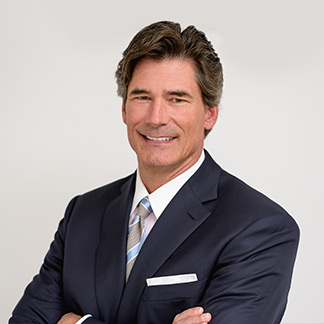
Garet became involved in kidney-related healthcare when his daughter was
diagnosed with kidney failure at age 10. He wanted to donate his kidney to his
daughter and proceeded through the donor evaluation process only to learn,
36 hours prior to surgery, that he would not be able to donate his kidney
because he failed the final cross match test. Garet’s daughter received
a kidney after an extensive donor search and is doing well. It was during this
period that he learned that there was a better way to organize living donor
transplants that could improve the lives of thousands of people facing kidney
failure. This was the founding idea of the National Kidney Registry.
To support this idea, Garet and his wife have contributed $200,000 to start
the Registry. Garet receives no salary from the Registry.
Garet has 20+ years of business and technology experience, including serving
as Chief Executive Officer for both public and private companies. In addition
to leading the Registry, Garet owns a consulting practice, serves on the board
of Peridrome Corporation and is a sub-committee member of the UNOS Paired
Exchange Working Group.
Prior to starting the Registry, Garet led the spin-off of Rapid Solutions Group
from DST and established it as a technology leader serving the healthcare
and financial services markets. Garet led the growth of the business to $85
million in revenue supported by 500 employees across four locations in the
United States. From 1993 to 2003, he led the growth of DST Output's Marketing
Service Group from $2 million to more than $70 million in revenues. In 2003,
this business was sold to Janus for $1.1 billion and renamed Rapid Solutions
Group. Prior to DST, Garet held several management and technology positions
at EDS, General Motors, and other leading firms. Garet earned his MBA from
the Wharton School, received his undergraduate degree from the University of
Montana, and served in the United States Marine Corps.
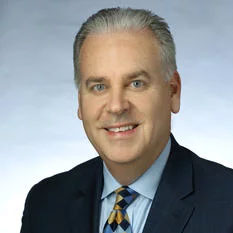
Thomas Mollo Executive Director
Tom’s interest in kidney-related healthcare is one of a very personal
nature. Tom’s father, at the age of 48, died as a result of kidney
failure. His father left behind a wife and five young children. Not only was
his father’s life cut short but his death became a major life-changing
experience for the entire family. Tom views kidney exchanges as an opportunity
to minimize the chances that other families will have to go through the same
devastating experience as he did and to offer a better life to those affected
by kidney disease.
Tom has 25+ years of management experience, including senior operating
positions at TIAA-CREF and JC Penney. While at TIAA-CREF, Tom was responsible
for the communication of sensitive financial information to 3.2 million
customers representing over $380 billion in assets under management. Tom has
managed large-scale operations and has extensive experience dealing with
technology-based mission-critical applications. Tom attended the New York
Institute of Technology and served 20 years in the New York Air National Guard.
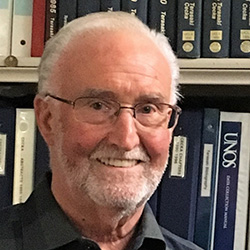
Duke DuCasse Counselor
Duke has 40+ years of business experience. He was the founder and president of the
Boston Division of Mail Processing Systems, which provided "data to mail services"
in the financial and health care industries. Duke grew this business from a start-up
to a $20 million dollar business. Duke started his career at Moore Business Forms
selling business forms and complex computers.
He was one of Moore's top producers and installed many computer systems in the
early years of the adoption of data processing technology.
Duke became involved in kidney related health care as the result of the relationship
he and Garet Hil developed while they worked at Mail Processing Systems in Boston in
the early 90s. Duke has been married to his wife, Mary Lou, for forty-seven years.
They have two children and three grandchildren.
Duke attended the University of Miami in Florida.
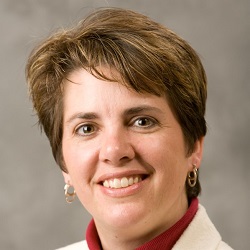
Michele Gallucci Consultant
Michele is a business development professional with 18+ years working in
the healthcare field with a focus on creating innovative solutions to the
problems and challenges facing today’s U.S. healthcare system. Michele
first encountered people facing kidney failure when, at the age of 15, she
worked in a nursing home located in her hometown in Massachusetts. During
this experience, she witnessed the hardships associated with kidney disease
and dialysis. She has a particular interest in kidney exchanges because of
its promise to help thousands of individuals in need of kidney transplants.
Michele’s healthcare experience includes tenures in managed care
(HMO and PBM) and over 14 years in the pharmaceutical industry. In her most
recent position as Director of Business Development supporting Pfizer’s
U.S. Pharmaceutical Operations, Michele led a team of business development
professionals that focused on bringing value through innovation. This included
the creation of new business ventures, licensing, strategic alliances, and
strategic planning. Michele earned an MBA from the Wharton School. She obtained
her bachelor’s degree from the University of Massachusetts. Michele is
an ongoing mentor in the Wharton Healthcare Program and is fluent in Spanish.
Rich Marta Senior Software Designer
Rich has 30+ years of experience innovating business solutions for leading
companies including Prudential, Merrill Lynch, ADP, and DST Systems. Progressing
from expanding the applicability of existing equipment, he later developed
complete, unique, proprietary systems, bridging inter-industry components
using self-conceived hardware. Systems featuring cross-industry component
integration generated new capabilities and economies, greatly broadening product
salability and realizing millions in savings. While Rich primarily developed
manufacturing systems for paper-based products or developed the product itself,
he also pioneered many operational and administrative processes, such as the
first mixed-weight mail postage payment system recognized nationally by the
U.S. Postal Service. In more recent years, Rich extended his ingenuity to
software development where his unique client software solutions garnered many
loyal customers. Rich received a bachelor’s degree in music composition,
performed professionally, and has written much original music.
Michael Schuermann Vice President, Customer Care
Michael is a customer care executive with 23+ years of experience managing
call centers, retail branches, and customer service functions. Mike spent much of
his career at Dreyfus in various customer-facing management positions. While at
Dreyfus, his responsibilities included overseeing 120 registered representatives
that provided call center support for over a million customers. Additionally,
he served as Executive Vice President overseeing Dreyfus’s 20+ retail
branches located across the United States. Mike also managed the High Net
Worth Client organization that represented over $20 billion in assets. A 1984
graduate of Adelphi University, Mike holds a bachelor’s degree in banking
and money management.
Joe Sinacore Counselor
Joe and his family are personally connected to the issues related to
Kidney disease through his cousin who is facing kidney failure and in need
of a transplant. Joe is a seasoned executive with 15 years of success in
business development, relationship management, team management, and operations
leadership positions. Prior to joining the National Kidney Registry, Joe held
positions with RR Donnelley and Rapid solutions Group where he managed multi
million dollar business relationships with prominent Healthcare and Financial
services firms. Well versed in technology, Joe influenced the development of
groundbreaking document production and distribution solutions that changed
the industry and are still in use today. Joe holds an AAS in Business
Administration from SUNY Rockland in Suffern New York. Joe is also active in
his church where he served as president of an essential parish organization.